

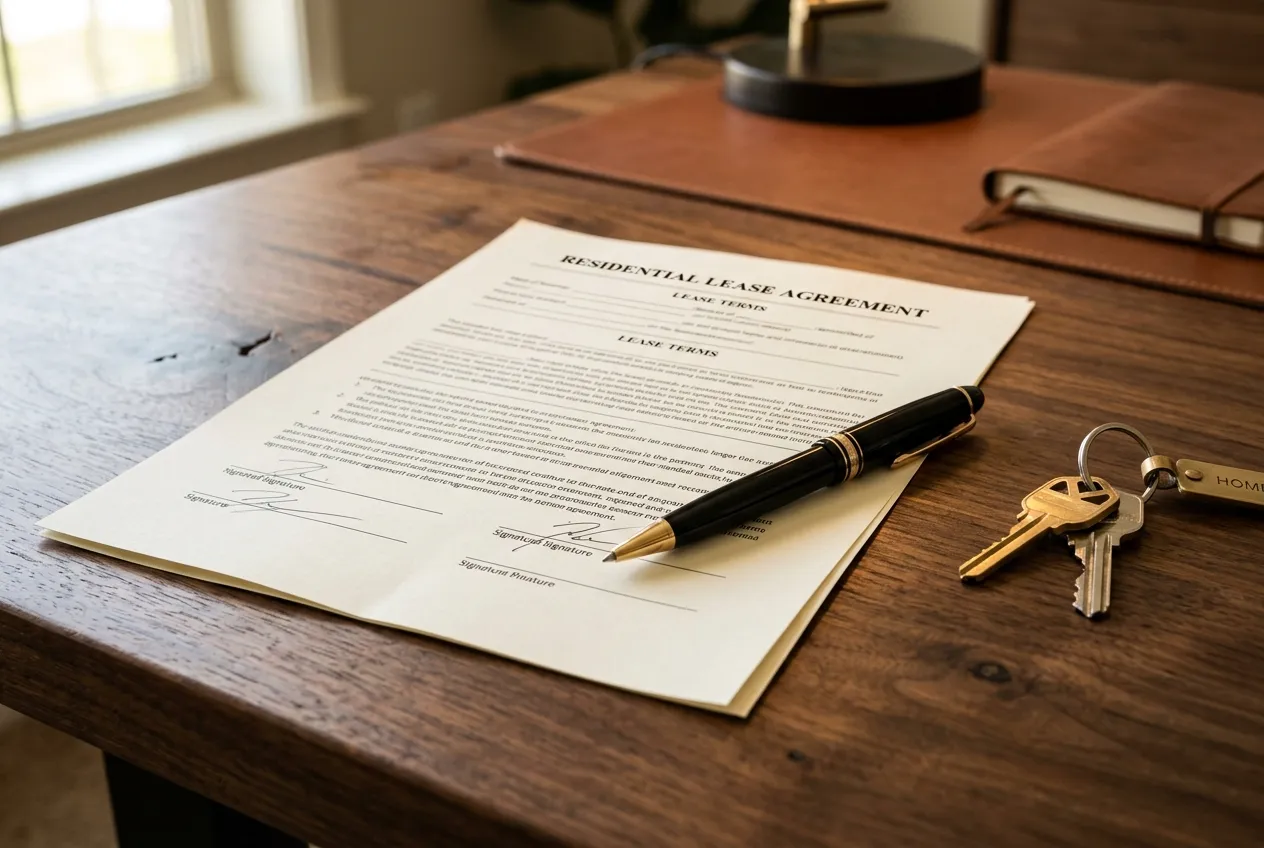
A Texas residential lease must identify the owner or authorized manager in writing per Texas Property Code Section 92.201, and for any rental built before 1978 federal law also requires a lead-based paint disclosure plus the EPA pamphlet plus a 10-day opportunity for the tenant to inspect for lead. Miss either of those, and the lease is partially unenforceable in ways that bite at exactly the wrong moment (deposit dispute, eviction hearing, repair claim).
Sounds like minor paperwork right. It is not. Section 92.201 has a quiet kicker: if you do not disclose the owner or authorized manager, the tenant can serve legal notice to anyone collecting rent, and that notice counts. So the missing disclosure does not just create a procedural defect. It creates a sloppy notice trail that bleeds into every future legal interaction.
I run Kendall Creek Properties in Austin. We use a current TAA lease because it has been litigated, updated every legislative session, and includes every required disclosure already. Custom leases downloaded from the internet are the second-most-common reason I see self-managed owners lose in JP court (the first is missed security deposit deadlines). So lets walk through what a Texas lease actually has to include, what should never be in one, the disclosures federal and Texas law require, the e-sign rules, and why the TAA lease is the default for nearly every professional landlord in this market.
Austin Metro Context
Austin MLS data via Kendall Creek Properties, May 2026:
- 3,378 active residential lease listings in the City of Austin
- 53-day average days on market for closed 2026 leases
- Travis County JP courts (where lease disputes are heard) handle thousands of eviction and deposit cases per year
A clean, complete lease is what makes the JP court appearance a 15-minute formality instead of a 90-minute mess.
Does Texas Require a Written Lease?
Technically no, for terms under one year. Texas recognizes verbal lease agreements under the Statute of Frauds. Verbal leases for terms one year or more are unenforceable. But relying on a verbal lease for any term is one of the riskier decisions a landlord can make.
Without a written lease you have no documented evidence of:
- The agreed rent amount and due date
- Late fee terms
- Who is responsible for which utilities
- Pet policies
- Maintenance responsibilities
- Move-out requirements
- Any specific terms of the tenancy
In a dispute it becomes your word against the tenant’s. Courts apply default rules under the Texas Property Code, which often do not align with what you intended. Always use a written lease. Always.
Essential Lease Clauses
Parties and Property Identification
Clearly identify all parties to the lease by full legal name. List every adult occupant (age 18 and over) who will reside in the property. Only people named on the lease have a legal right to occupy the unit.
Include the full property address and any specific unit or suite number. If the rental includes parking spaces, storage units, or designated areas, identify them.
Lease Term
Specify exact start and end dates. Most residential leases in Austin run 12 months, with 6-month and month-to-month arrangements also common. Include provisions for what happens at lease end: does it convert to month-to-month, does the tenant need to give renewal notice, what is the notice period for terminating a month-to-month tenancy.
Texas Property Code Section 91.001 requires at least one month’s notice to terminate a month-to-month tenancy unless the lease specifies a different period. Most TAA leases set 30 days written notice.
Rent Terms
State clearly:
- Monthly rent amount
- Due date (typically the first of the month)
- Acceptable payment methods (check, electronic transfer, ACH, money order)
- Where to send or deliver payment
- Grace period (if any; Texas law does not require one)
- Late fee amount and when it applies
- NSF/returned check fee
Late fees are governed by Section 92.019. The fee must be “reasonable” and is not enforceable unless:
- The fee is in writing in the lease
- The fee is not assessed until rent is at least one full day late
- The fee is a reasonable estimate of uncertain damages (the statute provides a safe harbor: up to 12% of monthly rent for units in buildings with four or fewer dwelling units, up to 10% for larger buildings)
So a $200 late fee on $2,000 rent is the safe harbor maximum (10%). Charging $500 on $2,000 rent is not reasonable and likely unenforceable.
Security Deposit
Document the deposit amount, conditions for deductions, and the process for return after move-out. Reference the 30-day return requirement under Section 92.103 and the itemized deduction requirement under Section 92.104. Include a provision requiring the tenant to provide a forwarding address in writing at move-out (required by Section 92.107 to start your statutory clock).
See our Texas security deposit laws guide for the full statutory framework.
Maintenance and Repairs
Define who is responsible for what. Texas law places certain maintenance obligations on the landlord under Section 92.052 for any condition that materially affects health or safety. The lease can assign additional responsibilities to tenants.
Common tenant responsibilities:
- Changing HVAC filters (typical TAA lease shifts this to the tenant)
- Maintaining smoke detector batteries (after initial installation)
- Basic lawn care (mowing, watering) for single-family rentals
- Keeping the property clean and sanitary
- Reporting needed repairs promptly in writing
Specify how tenants submit maintenance requests (written notice, online portal, phone) and any emergency procedures. See our landlord maintenance responsibilities guide for the statutory framework.
Utilities
Identify which utilities the landlord covers and which the tenant must establish in their own name. In most Austin single-family rentals, tenants handle all utilities. Make it explicit in the lease. If any utilities remain in the landlord’s name (water in some master-metered properties, trash service in some municipalities), state the arrangement clearly.
Pet Policy
If you allow pets, specify:
- Types and breeds permitted
- Size and number limits
- Pet deposit or monthly pet rent amount
- Tenant responsibilities (waste cleanup, damage liability, noise)
- Renters’ insurance requirements covering the pet
If you do not allow pets, state it clearly. Note: under the federal Fair Housing Act, service animals and emotional support animals with proper documentation are not pets and cannot be subject to pet deposits or breed restrictions.
Occupancy Limits
State the maximum number of occupants. Municipal occupancy standards generally follow the “two plus one” rule (two per bedroom plus one), but your lease can set reasonable limits within local code. Include a prohibition against subletting or assignment without written landlord consent.
Property Rules
- Smoking policy
- Noise and quiet hours
- Parking rules (assigned spaces, guest parking)
- Trash and recycling procedures
- Use of common areas (if applicable)
- Alterations to the property (paint, holes in walls, fixtures)
- Holiday and seasonal decorations
- Storage on porches, balconies, or yards
Entry by Landlord
Texas law does not specify a required notice period for landlord entry. Best practice (and most TAA leases) require 24 hours written notice except in emergencies. Define what constitutes an emergency and the landlord’s right to enter without notice in those situations. Section 92.0081 governs the very limited cases where a landlord can remove tenant property, change locks, or otherwise interfere with possession during a tenancy.
Required Disclosures
Lead-Based Paint (Federal, for Pre-1978 Properties)
For any property built before 1978, federal law (24 CFR 35 and 40 CFR 745) requires you to:
- Provide the EPA pamphlet Protect Your Family From Lead in Your Home
- Disclose any known lead-based paint or hazards
- Include a lead-based paint disclosure addendum signed by both parties
- Allow the tenant 10 days to conduct a lead inspection (if they choose)
Penalties for non-compliance run up to three times actual damages plus $19,500 per violation under federal regulations.
Owner or Manager Disclosure (Section 92.201)
Texas Property Code Section 92.201 requires the lease to include:
- The name and street address of the property owner (or an authorized property manager)
- The name and address of the person authorized to receive notices and process
If you operate as an LLC, the managing entity’s information must be disclosed. Most owners using a PM disclose the PM as the authorized agent for service.
Security Device Disclosure (Sections 92.151 to 92.170)
Subchapter D of Chapter 92 governs security devices. The lease should reference required devices (keyless deadbolts, door viewers, window latches, sliding door locks) and the Section 92.156 requirement to rekey exterior locks within 7 days of a new tenant moving in. The standard TAA lease includes this language. Custom leases must comply with Subchapter D or risk Section 92.164 damages.
Flood Disclosure (Texas Property Code 92.0135, Effective 2022)
For properties located in a 100-year floodplain or that have flooded in the past 5 years, landlords must provide written flood disclosure on a TAA-style form. Failure exposes the landlord to lease termination by the tenant and potential damages.
Parking Rules Disclosure
If the property has parking restrictions enforced by towing, Texas Property Code Section 92.0131 requires written disclosure of the rules and tow company information.
Smoke Detector Disclosure
The lease should state the smoke detector requirements under Section 92.251 and assign battery replacement responsibility (typically the tenant after initial installation).
Clauses to Avoid (Or Have Stricken)
Waiver of Landlord Habitability Obligations
Texas courts will not enforce clauses that attempt to waive the landlord’s obligation to maintain habitable conditions or comply with security device requirements. Including unenforceable clauses can undermine the credibility of the entire lease and create a fact pattern of bad faith.
Unreasonable Late Fees
A $500 late fee on $1,500 rent is not reasonable under Section 92.019 and is not enforceable. Stay inside the 10% to 12% safe harbor depending on building size.
Waiver of Jury Trial in Residential Leases
While common in commercial leases, jury trial waivers in residential leases are increasingly scrutinized in Texas and may not be enforceable.
Automatic Renewal Without Notice
Clauses that auto-renew for another full term without adequate notice to the tenant can create disputes. Best practice is to require written notice from both parties regarding renewal intentions 30 to 60 days before lease expiration.
Prohibited Discrimination Provisions
Any clause that violates federal Fair Housing Act, Texas Fair Housing Act, or (for properties inside Austin city limits) Austin’s source-of-income protection ordinance is not just unenforceable, it is a fair housing complaint waiting to happen.
Electronic Signature Rules
The Texas Uniform Electronic Transactions Act (UETA) and the federal E-SIGN Act both make electronic signatures fully enforceable on residential leases. DocuSign, Adobe Sign, Buildium e-sign, and similar platforms all produce legally binding executed leases. Both parties must consent to electronic execution (a single click in the platform suffices), and the signed PDF must be retained.
We e-sign every lease at Kendall Creek Properties through Buildium. The signed copy is stored in the tenant’s portal and our system, accessible to both parties indefinitely.
TAA Lease vs Custom Lease
The Texas Apartment Association (TAA) residential lease is the de facto standard across Texas. It is updated every legislative session by attorneys to reflect current statute. Most JP courts and attorneys are familiar with its provisions. TAA membership grants access to the current form.
For most landlords, the TAA lease provides better protection than a custom lease. It covers all required disclosures, includes balanced provisions for both parties, and has been tested in court many times.
If you use a custom lease, have it reviewed by a Texas real estate attorney. Generic template leases downloaded from the internet often:
- Miss the Section 92.201 owner/manager disclosure
- Include unenforceable jury trial waivers
- Use late fee structures that violate Section 92.019
- Omit required security device language
- Fail to comply with current lead-based paint requirements
A $300 attorney review pays for itself the first time a tenant brings the lease to a JP court.
Lease Amendments and Addenda
Sometimes you need to modify terms after signing. Any changes should be documented in a written addendum signed by all parties. Common addenda:
- Pet addendum (adding or removing a pet)
- Roommate change (adding or removing an occupant)
- Rent adjustment (mid-lease changes by mutual agreement)
- Property modification approval (tenant requesting to paint, install shelving)
Never rely on verbal agreements to modify lease terms. If it is not in writing and signed by both parties, it is not enforceable.
What Happens When the Lease Has Gaps
When a lease is silent on a topic that comes up in dispute, the court applies the default rules in the Texas Property Code. Sometimes those defaults favor the tenant. Sometimes they favor the landlord. Usually they favor whichever party had nothing to lose by not having the term documented.
A complete lease is the cheapest insurance policy you will ever buy.
Frequently Asked Questions
Does Texas require a written lease?
Not for terms under one year. Verbal leases are legally enforceable under the Statute of Frauds for short terms. But you should always use a written lease for any rental. The defense of “what we discussed” loses to the offense of “what the statute says by default” almost every time.
What is the maximum late fee in Texas?
Section 92.019 sets a safe harbor: up to 12% of monthly rent for properties in buildings with four or fewer dwelling units, up to 10% for larger buildings. Fees outside the safe harbor must be a reasonable estimate of uncertain damages or they are unenforceable.
Are electronic signatures valid on Texas leases?
Yes. Texas UETA and the federal E-SIGN Act both make electronic signatures fully enforceable. DocuSign, Adobe Sign, and similar platforms produce legally binding executed leases.
What disclosures are required on a Texas lease?
Owner/manager identification (Section 92.201), lead-based paint (federal, pre-1978 properties), security device disclosure (Subchapter D), flood disclosure for floodplain properties (Section 92.0135), parking towing rules (Section 92.0131), and smoke detector responsibilities (Section 92.251).
Can I use a generic lease template I downloaded online?
Risky. Generic templates often miss required Texas disclosures, include unenforceable provisions, or fail to comply with current statute. Have any custom lease reviewed by a Texas real estate attorney, or use the TAA lease.
What is the TAA lease and why do landlords use it?
The Texas Apartment Association residential lease is the standard professional lease form in Texas. Updated every legislative session, includes all required disclosures, balanced provisions, well-tested in court. Most professional landlords and PMs use it.
Can a Texas lease prohibit pets?
Yes. Pets are not a protected class. Service animals and emotional support animals with proper documentation under the Fair Housing Act are not pets and must be accommodated.
Do I need a separate addendum for a roommate change?
Yes. Any modification to the lease should be in writing, signed by all parties. Verbal modifications are unenforceable.
Can a lease waive Texas habitability requirements?
No. Courts will not enforce clauses attempting to waive landlord habitability obligations under Section 92.052 or security device requirements under Subchapter D.
How long should I keep a signed lease after it ends?
At least four years (the Texas statute of limitations for property damage claims). Most professionals keep them indefinitely in digital storage.
How Kendall Creek Properties Handles Leases
We use the current TAA lease for every property we manage. Every required disclosure included. Late fees inside the Section 92.019 safe harbor. Electronic execution through Buildium. Signed copies stored in the owner portal and tenant portal, accessible to both parties indefinitely.
When we onboard a new owner with an existing lease, we audit it for missing disclosures and unenforceable provisions. Most existing leases have at least one gap that would matter in court. The conversion to a current TAA lease at the next renewal closes those gaps.
Related Reading
For the full Texas landlord legal framework see Texas landlord tenant laws every property owner should know. For the screening process that determines who signs the lease see tenant screening in Texas. For what happens if you need to enforce the lease through eviction see the Texas eviction process.
If you want a PM to handle the lease drafting, disclosures, e-sign, and document management for you, here is what our service covers, or reach out through our contact page to talk through your specific property. You can also browse current rentals to see what we put on the market.