

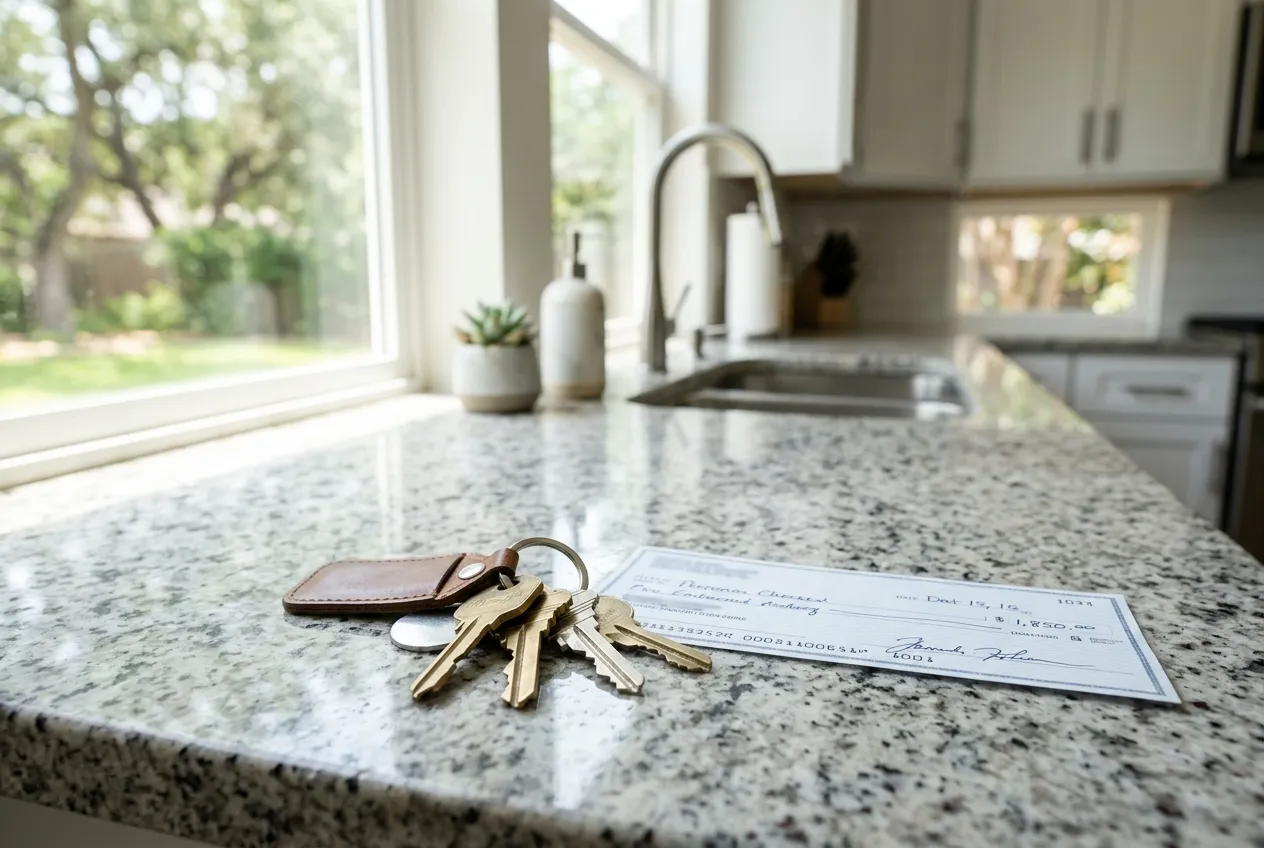
Texas landlords have exactly 30 days after a tenant surrenders the property to refund the security deposit or send an itemized list of deductions, and missing that deadline in bad faith costs $100 plus three times the wrongfully withheld amount plus the tenant’s attorney fees. That is Section 92.103 for the deadline and Section 92.109 for the penalty, and yes, those section numbers are worth knowing by heart if you self-manage.
Sounds strict right. Because it is. I have watched landlords lose JP court rulings over a $900 deposit and walk out owing four grand once the math finished. The most common version is not even greed. It is the owner who got busy, missed the 30-day window, and tried to send the itemized list on day 38. By then the legal presumption already flipped to bad faith, and the conversation in court is no longer about the deductions. It is about how much the landlord owes the tenant.
I run Kendall Creek Properties in Austin. Security deposit handling is one of the boring middle parts of property management that owners do not think about until it goes sideways. So lets walk through what the statute actually says, what counts as wear and tear vs damage, and how to handle the move-out so the deposit conversation is settled before anyone gets emotional.
The Five Sections That Matter (Texas Property Code Chapter 92, Subchapter C)
Texas security deposit law lives in Sections 92.101 through 92.110 of the Texas Property Code. Five of them do almost all the work:
- Section 92.102 defines “security deposit” as any advance of money other than rent intended to secure performance of the lease. Pet deposits count. Last month’s rent technically does not (that is rent, not a deposit).
- Section 92.103 is the 30-day refund deadline.
- Section 92.104 is the itemized deduction rule.
- Section 92.107 says the tenant has to give you a forwarding address in writing before you owe the refund.
- Section 92.109 is the bad-faith penalty: $100 plus three times the wrongfully withheld amount plus attorney fees.
Read them once and the rest of this article is just operational detail.
Austin Metro Snapshot (Why the Deposit Conversation Matters More Right Now)
Austin MLS data via Kendall Creek Properties, May 2026:
- 3,378 active residential lease listings inside the City of Austin with an average asking rent of $2,351 and a median of $1,850
- 53-day average days on market for closed leases in 2026, up from 22 days two years ago
- 78705 (UT-adjacent) sitting on 815 active leases, the loosest submarket in the metro
- 78704: 211 active at a $3,269 average
- Round Rock, Cedar Park, Leander, Pflugerville: each 130 to 261 active, averaging $2,256 to $2,417
Why does that matter for security deposits? Because a soft rental market is exactly when owners try shortcuts. They skip the move-in walkthrough to fill the vacancy faster. They take phone photos instead of a real condition report. They tell themselves they will catch it at move-out. Then nine months later the tenant gives notice, you walk the property, and the only proof of pre-existing condition is your memory. That is how deposit disputes are born.
How Much Can You Charge for a Security Deposit in Texas?
There is no statutory cap. Texas Property Code Chapter 92 is silent on deposit amount, which means landlords can technically charge anything. Customary practice in the Austin market is one month’s rent for tenants with strong credit and two months for marginal applicants. Charging more than two months starts to look unreasonable to a judge, and it also kills your applicant pool in a market with 3,378 competing units.
Pet deposits are common and legal. Standard is $200 to $500 per pet, sometimes structured as a non-refundable pet fee plus a refundable pet deposit. The non-refundable fee is allowed under Texas law but should be clearly identified as non-refundable in the lease.
A note on emotional support animals and service animals: federal fair housing law overrides any pet policy. You cannot charge a pet deposit or pet fee for a documented assistance animal. That is HUD’s interpretation under the Fair Housing Act, not a Texas rule, but it controls.
The 30-Day Refund Deadline (Section 92.103)
This is the single most expensive number in the Chapter. After the tenant surrenders the property and provides a forwarding address in writing, you have 30 calendar days to do one of these:
- Refund the full deposit, or
- Refund the remainder plus a written itemized list of deductions
Both pieces have to go out inside the 30-day window. Sending the refund on day 22 and the itemized list on day 41 does not work. They go together.
The clock starts on surrender, not on lease end date. If the tenant moves out on March 5 with the lease running through March 31, your 30 days run from March 5. Surrender is the date the tenant returns possession (keys handed over, no personal property left behind, lease no longer claiming the unit).
Forwarding address has to be in writing under Section 92.107. A verbal “I’m headed to my sister’s place in Pflugerville” does not start your obligation. Email counts. Text counts. A handwritten note on the move-out checklist counts. If the tenant never provides one, your statutory clock never starts, but you still have to make a reasonable, documented attempt to get the address. Standard practice: ask at move-out, ask again in writing within 7 days.
What You Can and Cannot Deduct
Deductible:
- Damage beyond normal wear and tear (hole punched in drywall, cigarette burns in carpet, broken blinds)
- Unpaid rent (Section 92.104(a) allows it)
- Cleaning to restore the property to move-in condition, less normal wear
- Early termination fees if the lease specifies them and the tenant broke the lease
- Unreturned keys, garage remotes, gate cards
Not deductible:
- Normal wear and tear (faded paint, worn high-traffic carpet, minor scuffs, nail holes from hanging pictures)
- Pre-existing damage that was present at move-in (this is why the move-in report matters so much)
- Repairs needed because of the landlord’s deferred maintenance
- “Painting the whole unit” after a tenant who lived there four years (paint life is roughly 5 to 7 years, you cannot charge a tenant for normal aging)
The line between normal wear and damage is the entire ballgame. Texas Property Code Section 92.001 defines “normal wear and tear” as deterioration from intended use, not from negligence or carelessness. Three holes in the wall the size of a doorknob is damage. A few nail holes from picture frames is wear and tear. Stained carpet where the cat had ongoing accidents is damage. Mild traffic patterns in carpet after three years is wear and tear.
What Counts as “Itemized” (Section 92.104)
The itemized list is the part owners get wrong constantly. “Cleaning and repairs, $850” is not itemized. The statute requires enough detail that the tenant can see what was repaired, where it was, and what it cost. Examples of itemized vs not:
| NOT itemized | Itemized |
|---|---|
| Cleaning $300 | Deep clean of kitchen (oven, range hood, cabinet interiors) $185, carpet cleaning bedrooms 2 and 3 $115 |
| Repairs $400 | Replace broken closet door master bedroom $135, repair drywall damage living room $90, replace mini blinds bedroom 1 (3 sets) $175 |
| Painting $500 | Wall repair and touch-up paint kitchen (smoke damage above range) $500 |
Get invoices for the work. If you do the work yourself, document your time and materials at a reasonable hourly rate. Courts will not accept “I did it myself, charge them $50 an hour” without a record of what you did and how long it took.
The Bad-Faith Penalty (Section 92.109)
Failure to send the itemized list within 30 days creates a presumption of bad faith. That presumption is rebuttable but the burden is on you, and most JP courts give the tenant the benefit. Once the presumption attaches, the math gets ugly:
- $100 statutory penalty
- Plus three times the wrongfully withheld portion
- Plus the tenant’s reasonable attorney fees
On a $1,500 deposit fully withheld in bad faith: $100 + (3 x $1,500) + attorney fees = $4,600 minimum, often $6,000 to $8,000 once the tenant’s attorney gets their fees in. I have seen it. The tenant who knew about Section 92.109 and the landlord who did not had a very different afternoon at the JP courthouse.
Where to Hold the Deposit
Texas does not require a separate escrow account, does not require you to pay interest, and does not require any specific account type. Unlike Connecticut or Maryland, you can co-mingle deposits with your operating funds.
Smart practice is to hold deposits in a dedicated account anyway. Clean accounting, no temptation to spend the money, easier to prove at trial that the funds were available. Most PMs use a trust account in compliance with TREC rules for brokers handling other people’s money.
The Move-In Walkthrough Is Your Insurance Policy
The single most important moment in the deposit lifecycle is the move-in walkthrough. If you do this right, the move-out conversation becomes math, not opinion.
What we do at Kendall Creek Properties:
- Walk the property with the tenant before they take possession
- Use a standardized checklist covering every room, surface, appliance, and fixture
- Take timestamped photos of every room (we use the property’s address as the photo prefix in our cloud storage)
- Have the tenant sign the completed checklist and acknowledge they received a copy
- Email the tenant the same photo set and checklist within 24 hours so they have it on record too
The owners who skip this and try to defend a $900 carpet deduction nine months later with their iPhone photos of the master bedroom “from when I bought the place” are the owners who lose in JP court. Document the day they move in. The deposit conversation gets dramatically easier 18 months later.
The Move-Out Walkthrough
Repeat the same process at move-out. Compare to the move-in baseline. Photograph any damage. Note specific items requiring repair or cleaning. Get the tenant to sign acknowledging the condition (some will, some will not, signed is better but unsigned is fine if you have photo evidence).
If the tenant requests a pre-move-out inspection under Section 92.157, you are required to give them one and provide a list of expected deductions before they actually move out. Many tenants do not know this right exists. The ones who do exercise it usually fix the items themselves before move-out and avoid the deduction entirely, which is a good outcome for everyone.
Five Mistakes That Sink Landlords in JP Court
- Charging for normal wear and tear. Carpet worn after five years is wear. Faded paint after a four-year tenancy is wear. Trying to charge for these creates a bad-faith fact pattern even if your other deductions were legitimate.
- Missing the 30-day deadline. Mark it on your calendar the day the tenant surrenders. If you need contractor estimates, start that process within 48 hours of move-out.
- No itemized list. Even if the deductions exceed the deposit, send the itemized accounting. The list is what protects you.
- No move-in documentation. Without a signed move-in report and photos, you have no baseline to prove damage occurred during the tenancy.
- Deducting without receipts. Get actual invoices. Estimating without documentation rarely survives cross-examination from a tenant who actually read Chapter 92.
What Happens in JP Court If You End Up There
Security deposit cases in Austin go to Justice of the Peace court. The filing fee is around $100 for the tenant. Both sides show up, present evidence, the judge rules. No jury, no lawyers required (though either side can bring one). The whole thing usually takes one morning.
The tenant brings: copy of the lease, copy of the move-in report (if they have one), photos of the property at move-out, copy of the forwarding address request, copy of the itemized list (if they received one), proof of the deposit amount paid. The landlord brings the same set plus contractor invoices for any deductions.
The judge applies Chapter 92. If the deadlines were met and the deductions are legitimate and itemized, the landlord wins. If the 30-day window was missed or the list is not itemized, the judge generally finds for the tenant on the deadline issue and then evaluates whether the underlying retention was in bad faith. The triple damages and attorney fees attach if bad faith is found.
This is one of the few areas of Texas landlord law where the tenant has a clear procedural advantage if you make a mistake. The statute is written that way on purpose.
Frequently Asked Questions
How much can a Texas landlord charge for a security deposit?
There is no statutory limit. Customary practice in the Austin market is one month’s rent, sometimes two for tenants with marginal credit. Going beyond two months hurts your applicant pool and starts to look unreasonable to a judge.
How long does a Texas landlord have to return a security deposit?
30 days after the tenant surrenders the property and provides a forwarding address in writing. Texas Property Code Section 92.103. The refund and the itemized list both have to go out within that window.
What happens if my landlord does not return my deposit in 30 days?
The presumption shifts to bad faith. The tenant can sue in JP court for $100 plus three times the wrongfully withheld amount plus reasonable attorney fees under Section 92.109.
Can I deduct for cleaning after a Texas tenant moves out?
Yes, but only to restore the property to its move-in condition less normal wear and tear. Standard end-of-lease cleaning is generally not deductible. Specific cleaning beyond normal (deep oven cleaning, carpet cleaning if heavily soiled, pet-related cleaning) is deductible if documented.
Can I keep the entire deposit if the tenant broke the lease?
Only if the lease specifies early termination fees and only up to the actual amount of unpaid rent or specified fees, plus other legitimate damage deductions. You cannot keep the deposit as a “punishment” for breaking the lease without statutory or contractual basis.
Do I have to put a Texas security deposit in a separate account?
No. Texas does not require a separate or interest-bearing account. Smart practice is to use a dedicated account anyway for clean accounting. Brokers holding deposits have separate TREC trust account rules.
Is paint considered normal wear and tear in Texas?
Yes, generally. Paint has a useful life of roughly 5 to 7 years. After a normal tenancy, repainting is the landlord’s expense, not the tenant’s. Specific damage (smoke staining, holes, crayon murals from a small child) can be deducted as targeted repair.
What about a pet deposit?
Treated the same as a regular security deposit under Texas law. Same 30-day deadline, same itemization rules, same bad-faith exposure. Non-refundable “pet fees” are legal if clearly labeled as non-refundable in the lease.
Do I have to give the tenant a pre-move-out inspection?
Only if they request one under Section 92.157. If they do, you must provide it and give them a list of expected deductions before they actually move out.
What if the tenant never gives me a forwarding address?
Your statutory clock does not start until they provide one in writing under Section 92.107. Document your attempts to obtain the address. Hold the deposit in trust until they request it.
How Kendall Creek Properties Handles Deposits
Security deposit handling is one of the areas where professional management pays for itself fast. Our standard process:
- Move-in walkthrough with signed checklist and timestamped photo set, emailed to tenant within 24 hours
- Deposit held in trust account, never co-mingled
- Move-out walkthrough scheduled the moment we receive notice to vacate
- Deductions documented with vendor invoices, processed inside 14 days (not 30), to show good faith
- Itemized statement sent by certified mail with delivery confirmation
Most of our deposit returns are in the tenant’s hands within two weeks of move-out. That is not because we are heroes. It is because the system runs on autopilot once it is built right.
Related Reading
For the broader rulebook see Texas landlord tenant laws every owner should know. To prevent damage before it happens, read preparing your Austin rental property for new tenants. To get the lease itself right, see Texas lease agreement requirements.
If you would rather have someone else handle this, here is what our PM service covers, and you can reach out through our contact page if you want to talk through whether your property is a fit. You can also browse current rentals to see what we have on the market.